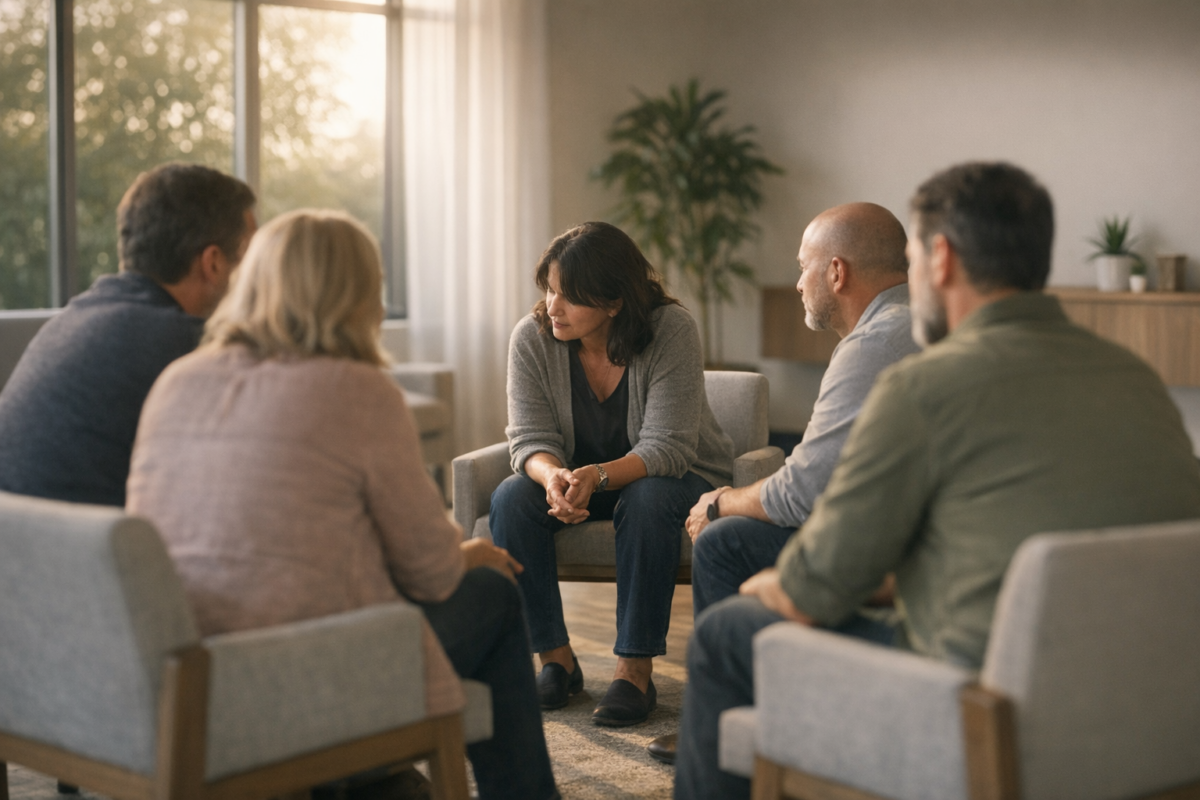
How Community Support Strengthens Recovery — And How to Find the Right Community for You
When someone is working through addiction, a mental health condition, or both at the same time, one of the most powerful things that can change is also one of the simplest: not doing it alone. Community support — the consistent presence of people who understand, who show up, and who walk alongside you — can reshape how recovery feels, how sustainable it becomes, and how deeply a person reconnects with the life they want to build.
That does not mean community support is a cure. It is not a substitute for clinical treatment, and it does not guarantee any specific outcome. But research consistently suggests that people who have meaningful social connection during recovery may experience greater stability, stronger motivation, and a reduced sense of the isolation that so often makes things harder. This article explains why community support matters, what forms it takes, how it works inside structured outpatient treatment, and how to navigate the real-world process of finding a community that actually fits.
Why Community Support Matters So Much in Recovery
Addiction and mental health challenges tend to pull people inward. Over time, relationships strain, social circles shrink, and daily life can narrow down to managing symptoms or managing substance use — sometimes both. Many people who reach out for help describe a deep exhaustion that goes beyond the physical. They are tired of carrying everything alone.
Community support works against that pattern. It does not fix everything, but it introduces something that isolation removes: the feeling that someone else sees what you are going through and is not turning away from it.
Breaking the Cycle of Isolation
Isolation is more than loneliness. In the context of recovery, isolation often means a person has no one to call when a difficult moment arrives, no one who understands the weight of what they are managing, and no structure outside their own willpower to keep them engaged. That kind of aloneness can make everything harder — processing emotions, staying motivated, following through on clinical recommendations, and even completing basic daily tasks.
Community support interrupts that cycle by providing regular contact with people who are navigating similar challenges. Even brief, consistent interactions — a conversation before a group session, a check-in from a peer — can remind someone that they are not invisible and that their effort matters to others, not only to themselves.
Accountability That Feels Like Support, Not Surveillance
Accountability in recovery is often misunderstood. It is not about someone watching over you to make sure you do not fail. Healthy accountability is the quiet knowledge that other people are invested in your progress and that you have made commitments — even small ones — that someone else is aware of.
Inside a recovery community, accountability might look like showing up for a scheduled group session because you know your peers will notice your absence. It might look like telling someone you trust that you are struggling, because you have already established the kind of relationship where honesty is safe. This form of accountability tends to support follow-through without creating shame, which is a balance that many people in early recovery need but rarely find on their own.
The Weight of Shared Experience
One of the most commonly described moments in recovery is the experience of hearing someone else say something you thought only you felt. This is not a small thing. When a person has spent months or years believing that their struggles are uniquely theirs — too complicated, too shameful, too specific to be understood — hearing another person articulate a similar experience can be genuinely disorienting in the best way.
Shared experience does not mean identical experience. Two people in the same outpatient group may be managing entirely different conditions, different histories, and different goals. But the overlap — the way addiction distorts thinking, the way anxiety rewires daily decisions, the way dual diagnosis creates layered challenges — creates a common language that most people outside of recovery cannot fully speak.
Rebuilding a Sense of Identity and Belonging
Recovery is not only about stopping something. It is also about building something new. For many people, active addiction or untreated mental health conditions have gradually replaced their sense of who they are. Hobbies, relationships, professional goals, and personal values can all recede when a person is in survival mode.
Community support can help someone begin the slow process of rebuilding an identity that is not defined by diagnosis or substance use. Being part of a group — contributing to it, being valued within it, watching others grow — can support a shift away from seeing oneself purely as someone defined by struggle, and toward seeing oneself as someone actively constructing a different kind of life. That shift does not happen overnight, and it is not guaranteed. But it is far more likely to happen in connection than in isolation.
What Community Support Actually Looks Like in Practice
The phrase “community support” covers a wide range of experiences. Not all of them look the same, and not all of them serve the same function. Understanding the differences can help someone make more informed decisions about what kind of support may be most useful for them at a given point in their recovery.
Peer Support Groups
Peer support groups are gatherings of people with shared lived experience who meet regularly to support one another. The most widely known examples include 12-step programs and SMART Recovery, but many other formats exist, including secular groups, gender-specific groups, and groups organized around specific conditions.
What makes peer support distinct is that it is led by people who have experienced similar challenges — not by clinicians. The value is in mutuality: everyone in the room is both giving and receiving. For some people, this dynamic is the first time they have felt genuinely understood by someone who is not being paid to listen.
Group Therapy in a Treatment Setting
Group therapy is different from a peer support group, and the distinction matters. Group therapy is facilitated by a licensed clinician who guides the process, introduces evidence-based frameworks, and helps participants develop specific skills — such as coping strategies, emotional regulation techniques, or communication tools.
In a structured outpatient treatment program, group therapy is often one of the primary ways community forms. People attend sessions together on a regular schedule, work through exercises together, and build trust through consistency. At Totality Treatment Center, group therapy is a core part of PHP, IOP, and IIP programming — and it is one of the most direct ways that clinical support and community support happen in the same room.
Family and Loved Ones
Family members and close friends can be a vital part of a recovery support system, but the dynamic requires care. Loved ones often want to help but may not know how to do so without overstepping, enabling, or unintentionally adding pressure.
Healthy family support usually involves clear communication, appropriate boundaries, and — when possible — education about what the person in recovery is working through. Some treatment programs offer family-focused components or case management that helps coordinate family involvement in a way that supports the client’s goals rather than complicating them.
Online and Virtual Communities
For people who cannot attend in-person groups regularly — whether due to work schedules, transportation limitations, health concerns, or personal preference — online communities can offer meaningful connection. Virtual support groups, recovery-focused forums, and telehealth-based group sessions provide access to peer interaction without requiring physical presence.
Virtual community is not a lesser version of in-person community. For some people, it is the more sustainable version. It may also serve as a bridge — a way to begin engaging with others before committing to in-person attendance. Totality Treatment Center offers telehealth services, and for clients whose schedules or circumstances make in-person attendance difficult, telehealth-based participation in treatment can include many of the same community-building elements as on-site care.
Activity-Based and Faith-Based Communities
Not all community support happens in explicitly recovery-focused settings. Some people find belonging through volunteer work, recreational activities, creative groups, fitness communities, or spiritual and faith-based organizations. These environments may not address addiction or mental health directly, but they provide structure, connection, and a sense of purpose — all of which can support recovery indirectly.
The key consideration is whether the environment is safe. A community that normalizes substance use, discourages honesty, or pressures someone to perform wellness they do not feel is not a supportive community — regardless of how welcoming it may appear on the surface.
Comparing Types of Community Support
| Type of Support | What It Involves | May Be a Good Fit For |
|---|---|---|
| Peer Support Groups | Regular meetings with peers who share lived experience; mutual support without clinical facilitation | People who value shared experience, want ongoing connection beyond treatment, and prefer a non-clinical environment |
| Group Therapy | Clinician-led sessions with structured skill-building, processing, and guided group interaction | People enrolled in outpatient treatment who want clinical guidance alongside peer connection |
| Family and Loved Ones | Support from people who know you personally; may include education, boundary-setting, and ongoing involvement | People with willing family members and a treatment team that can help coordinate healthy involvement |
| Online and Virtual Communities | Forums, virtual groups, or telehealth-based sessions accessed remotely | People with scheduling constraints, transportation barriers, or preference for initial low-pressure engagement |
| Activity-Based or Faith-Based Groups | Community built around shared interests, service, creativity, spirituality, or physical activity | People looking for connection outside of explicitly recovery-focused settings |
How Outpatient Treatment Creates Built-In Community
One of the things that often surprises people about structured outpatient treatment is how naturally community forms within it. When someone enrolls in a PHP or IOP program, they are not just receiving clinical care in isolation — they are joining a group of people who show up to the same place, at the same time, working through many of the same challenges.
That consistency matters. Over days and weeks, people begin to recognize one another. They begin to share. They begin to care about one another’s progress. This is not something a program can manufacture artificially — it grows out of the simple act of being in the same room, doing difficult work together, and witnessing each other’s honesty.
How Totality Treatment Center Builds Community Into Care
At Totality Treatment Center, community is not a feature added on top of treatment — it is woven into the structure of how care is delivered. Across PHP, IOP, and IIP programming, clients participate in group therapy sessions led by licensed clinicians, alongside individual therapy and case management. The group setting provides both clinical skill-building and the kind of peer connection that many people have been missing.
Because Totality serves adults 18 and older who are managing mental health concerns, substance use concerns, or dual diagnosis needs, the peer environment is shaped by people who often share overlapping challenges. Someone working through anxiety alongside alcohol use may sit next to someone managing depression and opioid recovery. The diagnoses differ, but the experience of feeling overwhelmed — of trying to hold too much together without enough support — is remarkably common across the room.
Totality also offers flexible scheduling options, including a Night Track for clients who work during the day, telehealth for those who need remote access, and in-person programming for those who prefer face-to-face interaction. These options exist because community support only works if a person can actually show up. If the schedule does not fit the client’s life, the community never gets a chance to form.
Case management at Totality is another layer of support that helps remove barriers to consistent engagement. Instead of asking clients to coordinate their own referrals, appointments, and logistics while also managing recovery, Totality’s team handles the coordination — so the client can focus on the clinical work and on building connections within their treatment community.
What Makes Community Support Effective
Not all community support is equally helpful, and recognizing the difference between a supportive community and one that may not serve a person well is an important part of the recovery process. Here are some qualities that tend to be present in communities that genuinely support recovery:
- Nonjudgmental atmosphere: People can speak honestly about setbacks, fears, and struggles without being shamed, lectured, or dismissed.
- Consistency: The community meets or interacts regularly enough that relationships can deepen and trust can build over time.
- Alignment with individual goals: The community respects each person’s path and does not pressure everyone to follow the same approach.
- Complementary to professional treatment: The community does not position itself as a replacement for clinical care, medication management, or professional therapy. It works alongside these things.
- Room for imperfection: A healthy community does not expect perfection. It holds space for the reality that recovery is nonlinear and that difficult days are part of the process.
If a community consistently makes someone feel worse — more ashamed, more anxious, more isolated — that is not the right community, regardless of how well-regarded it may be. The right fit is personal, and it is allowed to take time to find.
What to Do When a Community Does Not Feel Right
This is one of the most important and least discussed parts of building community support: sometimes the first group, the first meeting, or the first attempt does not feel like a fit. That does not mean community support is not for you. It means you have not found your community yet.
There are many reasons a particular group might not feel right. The format might not match your communication style. The other members might be at a very different stage of recovery. The meeting time might create stress rather than relief. The facilitator’s approach might not resonate. None of these reasons are failures — they are information.
Here are a few things that may help when early community experiences feel uncomfortable:
- Give it more than one session. First impressions in group settings are often shaped by anxiety rather than an accurate assessment of the group itself. If the environment feels safe but unfamiliar, attending two or three times before deciding may give a clearer picture.
- Talk to your clinician or counselor. If you are in outpatient treatment, your therapist or case manager can help you think through what felt off and whether a different format, schedule, or group might be a better fit.
- Try a different type of support. If in-person groups feel overwhelming, a virtual option might offer a gentler entry point. If a large group feels too exposing, a smaller group or individual peer connection might feel safer.
- Separate discomfort from danger. Feeling nervous in a new group is normal. Feeling judged, pressured, or unsafe is not. Learning to tell the difference is itself a skill that recovery supports.
At Totality Treatment Center, the admissions and clinical team can help clients identify which program format and group environment may be most appropriate for their needs, their temperament, and their stage of recovery. That kind of matching is part of what individualized care looks like in practice.
How Community Support Evolves Over Time
What a person needs from community support in the first week of treatment is usually different from what they need six months or two years later. Understanding this can help set realistic expectations and prevent frustration when the role of community shifts.
Early Recovery: Receiving
In the earliest stages of recovery, many people need to simply be held by a structure. They may not feel ready to share openly, and they may not trust the process yet. During this phase, the most important thing community provides is presence — the knowledge that other people are there, that they have been through something similar, and that showing up is enough for now.
This is often the phase where structured treatment environments like PHP or IOP are most valuable. The schedule provides a reason to show up. The group provides human contact. The clinicians provide safety. The person does not have to build anything from scratch — the structure already exists, and they simply need to step into it.
Sustained Recovery: Giving and Receiving
As someone moves through treatment and begins to stabilize, the dynamic often shifts. They start to recognize their own progress. They begin offering support to newer members. They find that helping someone else understand what they once struggled with reinforces their own learning and strengthens their sense of purpose.
This reciprocity is one of the most powerful aspects of community support. It transforms the person from someone who only receives care into someone who also contributes to the well-being of others — and that shift can be deeply meaningful for someone whose self-worth has been eroded by years of struggle.
Long-Term Recovery: Maintaining and Mentoring
Over time, community support may look less like formal treatment and more like sustained relationships, ongoing group participation, mentoring newer members, or staying connected through alumni networks, volunteer work, or other community involvement. The key is that the connection does not have to end when a program does. Many people in long-term recovery describe their ongoing community as one of the most important factors in maintaining stability.
Community Support and Dual Diagnosis
For people managing both a substance use condition and a mental health condition — sometimes called dual diagnosis or co-occurring disorders — community support carries additional importance. Dual diagnosis can create a layered set of challenges: the anxiety that feeds the craving, the depression that follows the relapse, the shame cycle that makes it harder to ask for help.
In a community that understands dual diagnosis, a person does not have to separate their experiences into neat categories. They do not have to explain why their depression is connected to their substance use, or why treating one without the other has not worked in the past. The community already gets it — or at least, the community is willing to hold space for the complexity.
Totality Treatment Center specializes in dual diagnosis treatment. Within the PHP, IOP, and IIP programs, group therapy sessions and peer interactions reflect the reality that many clients are managing more than one condition at a time. This integrated approach means the community that forms inside treatment is one that understands co-occurring challenges as the norm, not the exception.
Frequently Asked Questions
Why is community support important in recovery?
Community support may help reduce the isolation that often accompanies addiction and mental health challenges. Consistent connection with others who understand what recovery involves can provide accountability, shared experience, emotional safety, and motivation. Research suggests that social connection is associated with improved recovery outcomes, though individual results vary.
What is the difference between a support group and group therapy?
A support group is typically peer-led, meaning participants with shared lived experience support one another without a clinical facilitator. Group therapy is facilitated by a licensed clinician who guides the process, introduces therapeutic techniques, and helps participants develop specific coping and communication skills. Both can be valuable, and many people benefit from participating in both at different points in their recovery.
How can family members support someone in recovery without enabling?
Healthy family support usually involves learning about the person’s condition, respecting treatment recommendations, maintaining clear boundaries, and avoiding actions that shield the person from the natural consequences of their choices. Family education, open communication, and — when available — guidance from a treatment team or case manager can help loved ones find the right balance.
What if I feel uncomfortable in a support group?
Feeling nervous or uncertain in a new group setting is very common, especially in early recovery. It may help to attend more than once before deciding whether the group is a good fit. If the discomfort persists or if the environment feels unsafe or judgmental, it may be worth trying a different group format, a smaller group, or a virtual option. A therapist or counselor can help you evaluate what might work better.
Can online communities be effective for recovery support?
Yes. Virtual communities, including telehealth-based group sessions and online forums, can provide meaningful connection for people who face barriers to in-person attendance. While some people prefer face-to-face interaction, others find that online options reduce pressure and make consistent engagement more sustainable. Totality Treatment Center offers telehealth services that can include group and individual components.
How does outpatient treatment provide community support?
Structured outpatient programs like PHP and IOP bring people together on a regular schedule for group therapy, individual sessions, and other clinical activities. Over time, the consistency of shared attendance creates peer relationships and a sense of belonging. At Totality Treatment Center, group therapy is a core part of every program track, and the community that forms within treatment is one of the most valued aspects of the experience for many clients.
Is community support important for mental health recovery as well as substance use recovery?
Yes. While much of the research on community support has focused on substance use recovery, the same principles apply to mental health recovery. Isolation can worsen symptoms of depression, anxiety, trauma-related conditions, and other mental health challenges. Connection with others who understand those experiences — whether through group therapy, peer support, or other community settings — may support emotional regulation, reduce stigma, and strengthen motivation to continue treatment.
Taking the Next Step
If you have been trying to manage recovery on your own — or if you are supporting someone who has — you already know how heavy that weight can feel. Community support does not remove every challenge, but it can change the fundamental experience of recovery from one of isolation to one of belonging.
Finding the right community takes time, and it often begins with the right treatment environment. At Totality Treatment Center, our PHP, IOP, IIP, Night Track, telehealth, and in-person outpatient programs are designed to provide both clinical care and the kind of genuine human connection that supports lasting change. Our case management team helps with the logistics so you can focus on healing, and our clinical staff sees each person as a whole person — not just a diagnosis.
If you are wondering whether a structured outpatient program might be the right fit for you or someone you care about, our admissions team can help. They can walk you through program options, scheduling flexibility, level of care, and insurance or private-pay compatibility — all in a confidential, no-pressure conversation.
Call the Totality Treatment Center admissions team today to learn more about how our programs can support your recovery.