If you’re considering an outpatient dual diagnosis telehealth program with Aetna, you can access integrated treatment for both mental health conditions and substance use disorders from the comfort of your home. This virtual approach connects you with licensed professionals through secure video conferencing and messaging platforms, delivering tailored treatment programs and a supportive environment designed to meet your unique challenges. As you explore your options, understanding program formats, coverage details, and the steps to verify benefits will help you make informed decisions on your path to lasting recovery.
Understand dual diagnosis telehealth
What dual diagnosis means
Dual diagnosis refers to the coexistence of a mental health disorder and a substance use disorder in the same individual (MedlinePlus). In 2023, about 20.4 million U.S. adults lived with both conditions simultaneously (Cleveland Clinic). Research shows around 50% of people with a substance use disorder will also face a mental health challenge at some point (Cleveland Clinic). Addressing both issues together through integrated care is crucial for long-term success.
Benefits of telehealth care
Telehealth models rapidly shifted to both inpatient and outpatient arenas during the COVID-19 pandemic, requiring quick adaptations by patients and providers (NCBI). Studies demonstrate that remote mental health treatment yields symptom reduction and quality of life improvements comparable to in-person care (NCBI). Additionally, virtual sessions have shown a 16% higher completion rate than office-based therapy, often leading to stronger engagement and better outcomes (The Mindful Lemon).
Benefits of telehealth care:
- Increased access from any location
- Greater scheduling flexibility
- Enhanced privacy and comfort
- Improved completion and engagement rates
Tailored remote treatment programs
Outpatient telehealth programs deliver comprehensive care through individualized plans. You’ll work one-on-one with therapists, participate in group sessions, and receive medication management when needed. This approach ensures you’re supported every step of the way, combining evidence-based therapies with holistic strategies to foster resilience and growth.
Explore Aetna coverage details
Covered therapy types
Aetna provides coverage for both online therapy and in-person sessions for a range of mental health conditions including substance abuse, depression, anxiety, stress, relationship issues, and OCD (The Mindful Lemon). Covered modalities often include:
- Cognitive behavioral therapy (CBT)
- Dialectical behavior therapy (DBT)
- Motivational interviewing
- Medication-assisted treatment (MAT)
Costs and network rules
After meeting deductibles, session costs typically range from $0 to $60, with 68% of states averaging $30–$50 per visit (The Mindful Lemon). You’ll want to verify whether your provider is in-network to minimize out-of-pocket expenses and confirm any co-payment requirements.
Parity and licensing
Under federal parity laws, Aetna generally covers mental health care at the same level as physical health care. However, multistate licensure limits may apply if your provider is based outside your home state. For a detailed guide on participating centers, explore our resource on insurance accepted outpatient dual diagnosis rehab.
Evaluate program formats
Intensive outpatient program
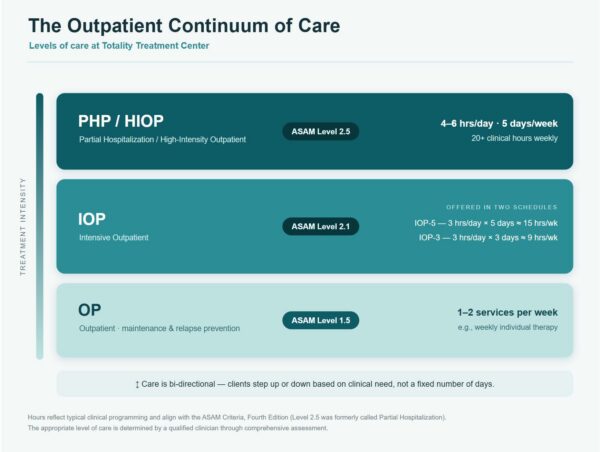
An intensive outpatient program (IOP) offers a moderate level of care, allowing you to attend treatment sessions multiple times per week while living at home. Typically, you’ll engage in 3–5 days of therapy for 3 hours each day, over 8–12 weeks.
Partial hospitalization program
Partial hospitalization programs (PHP) provide a higher intensity of care, often resembling a day-treatment model. You’ll participate in 5 days of programming for 4–5 hours daily, usually spanning 4–6 weeks. This format is ideal if you need structured support but do not require full residential care.
Hybrid care models
Many dual diagnosis telehealth programs combine virtual and in-person elements to create a flexible plan suited to your needs. For example, you might attend on-site assessments or medication management visits while completing most therapy sessions online.
Program format comparison:
| Format | Intensity | Schedule | Typical duration |
|---|---|---|---|
| Intensive outpatient program | Moderate | 3–5 days/week, 3 hrs | 8–12 weeks |
| Partial hospitalization program | High | 5 days/week, 4–5 hrs | 4–6 weeks |
| Hybrid care model | Variable | Mix of virtual & on-site | 6–12 weeks |
Review treatment services
Therapy modalities available
You’ll encounter a range of evidence-based therapies tailored to dual diagnosis care:
- Cognitive behavioral therapy to reshape unhelpful thought patterns
- Dialectical behavior therapy for emotion regulation and distress tolerance
- Trauma-informed approaches addressing adverse childhood experiences
- Motivational interviewing to strengthen your commitment to change
Medication management options
Medication-assisted treatment can play a key role in managing substance use disorders, especially for opioids and alcohol. Common options include:
- Buprenorphine or methadone for opioid dependency
- Naltrexone for alcohol and opioid cravings
- SSRIs or other psychotropic medications to stabilize mood and anxiety
Peer support networks
Group sessions foster camaraderie and mutual accountability, offering the support necessary for lasting recovery. Through weekly telehealth groups, you’ll connect with peers facing similar challenges and celebrate milestones together. For details on therapy coverage, see our page on outpatient therapy for addiction and depression insurance coverage.
Prepare for sessions
Check technology requirements
Ensure you have:
- A reliable high-speed internet connection
- A computer, tablet, or smartphone with a camera and microphone
- A backup plan such as a mobile hotspot in case of outages
Ensure privacy and safety
Select a quiet, private space in your home:
- Use noise-cancelling headphones to maintain confidentiality
- Inform family members or roommates not to interrupt
- Confirm the telehealth platform meets HIPAA standards for secure data transmission
Navigating these technical and privacy considerations will help you fully engage in your telehealth appointments without distraction.
Navigate insurance approval
Preauthorization steps
Most Aetna plans require preauthorization for intensive outpatient or partial hospitalization services. Your provider will submit:
- A DSM-5 diagnosis code
- A treatment plan outlining medical necessity
- Documentation of prior treatment history
Documentation essentials
To streamline approval, ensure your records include:
- Clinical assessments confirming dual diagnosis
- Notes from recent mental health or substance use evaluations
- A signed treatment consent form
Handling appeals
If coverage is denied, you have the right to appeal. You can:
- Request a peer-to-peer review between your provider and Aetna
- Submit additional clinical evidence
- File a formal grievance through Aetna’s appeals department
For more on combined mental health and substance use coverage, visit our guide to outpatient mental health & substance use treatment covered by insurance.
Take next recovery steps
Choose a treatment provider
Identify a telehealth program accredited for dual diagnosis care. Look for licensed clinicians experienced in managing both mental health disorders and substance use issues, ensuring comprehensive care in a supportive environment.
Verify your insurance details
Before scheduling sessions:
- Confirm your plan’s benefits, co-payment, and deductible amounts
- Check network status for your chosen provider
- Review any preauthorization or clinical documentation requirements
You can also explore our overview of dual diagnosis outpatient program covered by insurance for more information.
By taking these steps, you’ll be well-prepared to embark on a telehealth recovery plan that integrates therapy, medication management, and peer support—all covered under your Aetna benefits. Your journey to healing starts with the right program, the right coverage, and the commitment to lasting change.