If you’re exploring an outpatient recovery support program covered by insurance, this guide will walk you through your options. Whether you’re seeking services for alcohol, opioids, stimulants, benzos, or polysubstance use, understanding how outpatient support services align with your policy can help you plan effectively. In the sections that follow, you’ll learn about program types, insurance basics, strategies to maximize your benefits, and practical steps to prepare for a successful recovery journey.
Explore program types
Outpatient recovery support programs offer flexible care that lets you receive treatment while living at home and maintaining work or family commitments. Below are the main options you can consider.
Standard outpatient counseling
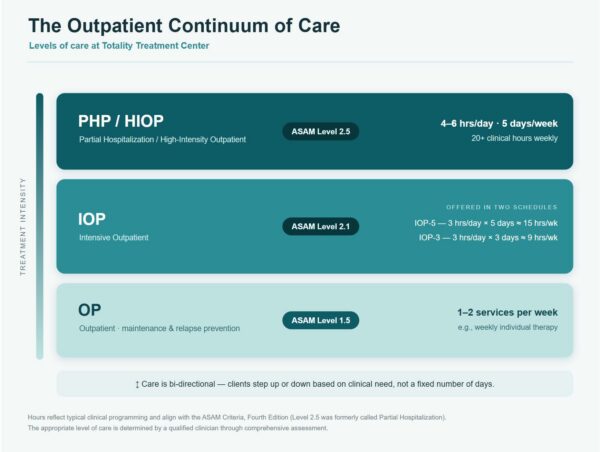
Standard outpatient counseling typically involves weekly or biweekly appointments at a clinic or counseling center. You might attend:
- Individual therapy to address underlying factors in your substance use
- Group sessions for peer support and accountability
- Case management to coordinate services such as housing or vocational assistance
- Relapse prevention workshops
Many facilities offering these services accept coverage for outpatient drug and alcohol treatment services covered by insurance.(/outpatient-drug-and-alcohol-treatment-services-covered-by-insurance)
This model suits individuals with lower medical acuity who need structured support without 24/7 supervision. It can also complement ongoing psychiatric care if you have co-occurring mental health conditions.
Intensive outpatient programs
Intensive outpatient programs (IOPs) provide a higher level of structure, usually requiring 9 to 19 hours of treatment per week. Core components include:
- Multiple weekly group therapy sessions
- Regular individual counseling
- Family therapy or education modules
- Medication management for cravings or co-occurring disorders
IOPs are ideal if you need more support than standard outpatient care but do not require inpatient hospitalization. Many IOPs are insurance covered intensive outpatient program for addiction,(/insurance-covered-intensive-outpatient-program-for-addiction) with some plans covering up to 100 percent of services.
Partial hospitalization programs
Partial hospitalization programs (PHPs) deliver near–round-the-clock care without overnight stays. You may spend 20+ hours per week at the treatment center, participating in:
- Daily therapy groups
- Medical supervision during detox or stabilization
- Skills workshops such as coping, mindfulness, and vocational training
- Nutritional counseling and holistic therapies
PHPs bridge the gap between inpatient care and outpatient services. If you require close medical monitoring or structured routines, check whether a partial hospitalization program substance abuse insurance accepted your plan.(/partial-hospitalization-program-substance-abuse-insurance-accepted)
Telehealth addiction services
Virtual outpatient support lets you attend therapy and educational sessions online. Telehealth addiction services typically include:
- Video or phone counseling
- Online support groups
- Digital relapse prevention tools
This option can eliminate transportation barriers and fit into busy schedules. You can explore outpatient telehealth addiction treatment covered by insurance to find providers in your network.(/outpatient-telehealth-addiction-treatment-covered-by-insurance)
Specialty outpatient programs
Many centers tailor outpatient services to specific populations or needs. Examples include:
- Veterans: outpatient rehab programs for veterans covered by insurance(/outpatient-rehab-programs-for-veterans-covered-by-insurance)
- Women: womens outpatient alcohol treatment covered by insurance(/womens-outpatient-alcohol-treatment-covered-by-insurance)
- Men: mens outpatient drug rehab covered by insurance(/mens-outpatient-drug-rehab-covered-by-insurance)
- Dual diagnosis: dual diagnosis outpatient program covered by insurance(/dual-diagnosis-outpatient-program-covered-by-insurance)
- Trauma-informed care: outpatient trauma and addiction program covered by insurance(/outpatient-trauma-and-addiction-program-covered-by-insurance)
- Family support: outpatient family therapy for addiction covered by insurance(/outpatient-family-therapy-for-addiction-covered-by-insurance)
- Relapse prevention: outpatient relapse prevention program with insurance accepted(/outpatient-relapse-prevention-program-with-insurance-accepted)
- High acuity: outpatient high acuity addiction treatment insurance coverage(/outpatient-high-acuity-addiction-treatment-insurance-coverage)
Specialty tracks often integrate evidence-based therapies like cognitive behavioral therapy, motivational interviewing, and holistic approaches tailored to your circumstances.
Understand insurance coverage
Knowing how your policy works can reduce surprises and out-of-pocket costs. Below is an overview of the main elements that shape coverage for outpatient recovery services.
Types of insurance plans
Different types of insurance policies provide coverage for rehab, including private health insurance, employer-sponsored plans, and government-funded programs such as Medicaid or Medicare (Mississippi Drug and Alcohol Treatment Center). Each plan has its own network rules, deductibles, copays, and prior-authorization requirements.
Medicaid and Medicare details
Medicaid coverage for outpatient rehabilitation varies widely by state, potentially limiting the number of therapy sessions covered (VFMC). In Ohio, for example, Medicaid follows ASAM placement criteria to reimburse outpatient, intensive outpatient, and residential services (Leora Behavioral Health). Despite these provisions, approximately 90 percent of Ohioans with substance use disorders do not receive needed care due to access barriers (Leora Behavioral Health).
Medicare covers outpatient mental health care, intensive outpatient program services, partial hospitalization, and inpatient care for SUDs (Medicare.gov). Preventive screenings and counseling for conditions such as depression, opioid use disorder, and alcohol misuse are also included. However, Medicare imposes annual caps on therapy services, and you may be responsible for up to 20 percent of approved costs without supplemental coverage (VFMC).
In-network vs out-of-network
Choosing an in-network facility typically results in the lowest out-of-pocket costs, since your insurer negotiates rates directly with providers (American Addiction Centers). In-network coverage can range up to 100 percent, while out-of-network benefits may cover only 75 percent or require higher deductibles. Preferred Provider Organization (PPO) plans generally allow out-of-network visits but favor in-network rates. Health Maintenance Organization (HMO) plans usually require referrals and limit coverage to in-network providers only.
Common coverage challenges
Even with legal protections, you may encounter roadblocks:
- Denials based on medical necessity criteria
- Requirements for prior authorization on higher levels of care
- Coverage duration limits on therapy sessions
- Administrative errors such as coding mismatches
- Out-of-network restrictions (VFMC)
Insurers often use the American Society of Addiction Medicine (ASAM) Criteria to determine placement and medical necessity. They must disclose these criteria upon request (Behave Health). Being familiar with your insurer’s process can help you advocate effectively for coverage.
Maximize your benefits
Taking proactive steps can minimize out-of-pocket expenses and streamline your treatment journey.
Verify plan benefits
- Review your Summary of Benefits and Coverage (SBC) for SUD services
- Call your insurer to confirm coverage levels, deductibles, copays, and provider networks
- Ask which outpatient services require prior authorization or have session limits
Obtain prior authorization
For higher levels of care such as IOP or PHP, you’ll often need prior authorization. Work with your healthcare provider or rehab facility to submit clinical documentation that demonstrates medical necessity. This collaboration can reduce denial risk and expedite approval.
Coordinate provider billing
Ensure your treatment center is contracted with your insurer. If you have a PPO plan, verify out-of-network reimbursement levels. For HMO members, confirm referral requirements and in-network status. Many facilities list accepted insurers on their websites, such as outpatient rehab program accepts aetna insurance(/outpatient-rehab-program-accepts-aetna-insurance).
Plan for out-of-pocket costs
Even with primary coverage, you may face copays or coinsurance. Therapy copays can reach up to $75 per session, which may deter ongoing care (VFMC). In such cases, explore:
- Supplemental insurance or discount programs
- Sliding-scale fees at community clinics
- Payment plans offered by treatment centers
Additionally, many policies cover aftercare services like outpatient counseling and support groups, critical for maintaining sobriety (Mississippi Drug and Alcohol Treatment Center).
Prepare for recovery
Your mindset and support network are vital to a successful outpatient program. Use these steps to set the stage for lasting change.
Assess your readiness
Consider where you are in your recovery journey:
- Have you completed medical detox or stabilized acute withdrawal?
- Do you have stable housing and transportation?
- Are you motivated to follow a structured treatment plan?
Answering these questions honestly will help you choose the right level of outpatient care.
Identify treatment goals
Write down clear, measurable objectives such as:
- Remaining sober for the next 30 days
- Attending all scheduled therapy sessions
- Practicing coping skills daily
Setting specific goals provides focus and helps track your progress.
Engage family support
Recovery often involves loved ones. Family therapy can improve communication, rebuild trust, and teach you how to navigate triggers in your home environment. Many plans cover outpatient family therapy for addiction covered by insurance,(/outpatient-family-therapy-for-addiction-covered-by-insurance) which can be invaluable in strengthening your support system.
Compare program costs
Understanding typical costs and coverage levels lets you balance your treatment needs with financial considerations.
Program comparison table
| Program type | Setting | Hours per week | Typical coverage level |
|---|---|---|---|
| Standard outpatient counseling | Clinic | 1–5 | 70–100% |
| Intensive outpatient program (IOP) | Clinic | 9–19 | 80–100% |
| Partial hospitalization program | Clinic/day | 20+ | 70–100% |
| Telehealth addiction services | Virtual | 1–10 | 70–100% |
| Specialty outpatient programs | Varies | Varies | 70–100% |
Coverage percentages depend on your plan’s in-network agreements, deductibles, and coinsurance.
Plan coverage overview
| Plan type | Referral requirement | In-network coverage | Out-of-network coverage |
|---|---|---|---|
| PPO | No | Up to 100% | Up to 75% |
| HMO | Yes | Up to 100% | Not covered |
| Medicaid | Varies by state | 80–100% | Not covered |
| Medicare | No | 80% after deductible | Not covered |
These figures illustrate general trends. Always confirm details with your insurer and treatment provider.
Take next steps
You’re now equipped to navigate outpatient recovery support programs within your insurance framework. Follow these actions to get started.
Verify your coverage
- Call the customer service number on your insurance card.
- Ask about substance use disorder benefits, including outpatient options, IOP, and PHP.
- Confirm your deductible status and any session limits.
- Request in writing any coverage determinations or authorization approvals.
Contact treatment centers
Reach out to centers that accept your plan, for example:
- Outpatient rehab program accepts Aetna insurance
- Outpatient recovery program covered by Healthnet
- Outpatient relapse prevention covered by Ambetter insurance
- Outpatient detox and relapse prevention covered by insurance
Prepare a list of questions about program structure, scheduling, and aftercare support. By verifying details upfront, you’ll set clear expectations and focus on recovery rather than logistics.
Embarking on an outpatient recovery support program covered by insurance can be a decisive step toward lasting sobriety. With informed planning and proactive communication, you can access the services you need while minimizing financial stress. Your recovery begins with that first call and the confidence that help is available and within reach.