Assess your eligibility
Finding outpatient rehab programs for veterans covered by insurance can be a crucial step in your recovery journey. Whether you or a loved one is seeking treatment for alcohol, opioids, stimulants, benzos, or polysubstance use, understanding how to leverage your benefits is essential. Outpatient services offer flexibility, allowing you to receive counseling, medication management, and peer support while maintaining work, school, or family commitments.
Before you explore specific programs, start by confirming your eligibility. Knowing which benefits apply to your situation will help you access rehab services without worrying about upfront costs.
VA health care criteria
All veterans who meet basic service and discharge requirements and who were exposed to toxins or other hazards while serving are eligible for VA health care, including those who served in Vietnam, the Gulf War, Iraq, Afghanistan, or any combat zone after 9/11 (VA.gov). To qualify:
- You must have served in active military, naval, or air service
- Your discharge status must be other than dishonorable
- For those who enlisted after September 7, 1980, or entered active duty after October 16, 1981, you typically need 24 continuous months of service unless an exemption applies
Enhanced eligibility status may place you in a higher priority group, granting you faster access to care and more comprehensive benefits.
CHAMPVA and TRICARE benefits
If you’re a spouse, dependent, or survivor of a veteran with a service-connected disability rating, you may qualify for CHAMPVA. This program covers most medical services and supplies, including prescription medications, mental health care, and medical equipment. Key points:
- CHAMPVA is the secondary payer to Medicare for outpatient care
- There’s no network requirement—providers simply need to accept assignment
- CHAMPVA covers many mental health and addiction services under its In-House Treatment Initiative
Active-duty service members and some veterans also qualify for TRICARE, which can work alongside VA benefits to fund addiction care.
Explore service options
Once you know which benefits apply, you can compare the types of outpatient rehab services available to you. Each option varies by intensity, setting, and the therapies offered.
Outpatient detox programs
If you need medical supervision during withdrawal, consider an outpatient detox setting. In these programs you visit the clinic for medication management and monitoring, then return home each day. For more details, see our guide on outpatient drug detox program covered by insurance.
Insurance covered intensive outpatient program
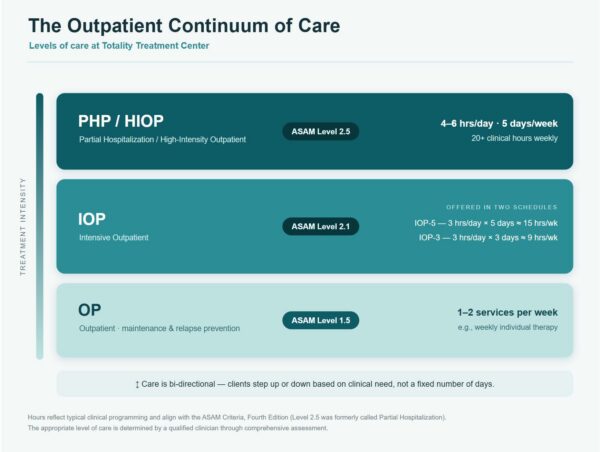
An intensive outpatient program (IOP) provides 9–20 contact hours per week of therapy, group counseling, and medication support. You’ll follow a structured schedule while still living at home. Learn more about an insurance covered intensive outpatient program for addiction.
Partial hospitalization programs
Partial hospitalization programs (PHP) deliver even more support, with 20+ hours of daily programming. PHPs blend medical oversight with individual and group therapies. Check out our overview of partial hospitalization program substance abuse insurance accepted.
Telehealth addiction treatment
If you live far from a VA clinic or prefer remote care, telehealth options let you meet with clinicians via video calls. These programs can include counseling, medication reviews, and group sessions. Explore outpatient telehealth addiction treatment covered by insurance.
Compare program features
With several service models available, weigh the program features that matter most to you:
Treatment settings explained
- Clinic-based: Attend sessions at a VA or community center
- Hospital-based PHP: Receive daily care in a medical setting
- Virtual: Join telehealth groups and teletherapy from home
- Hybrid: Combine in-person visits with telehealth check-ins
Therapy modalities
- Cognitive behavioral therapy to address thought patterns
- Motivational interviewing to strengthen recovery commitment
- Medication management (buprenorphine, naltrexone, acamprosate)
- Family therapy for relationship repair and support
- Peer support groups tailored to veterans
Aftercare and support
After completing your core program, ongoing care reduces relapse risk. Common aftercare services include:
- Regular outpatient counseling
- 12-step or peer-led support groups
- Medication-assisted treatment follow-up
- Vocational rehabilitation and housing assistance
Review coverage options
Understanding which plans cover your chosen program helps you avoid unexpected bills. Coverage typically falls under VA benefits, the Community Care Network, or private insurance.
Veterans Affairs coverage
If the VA offers a service directly, you may access it without copays, especially if you have a service-connected disability rating of 10% or higher. For outpatient mental health and substance use treatment, your first three visits per calendar year are copay-free through December 29, 2027 (VA.gov).
Community Care Network
Under the MISSION Act, the VA utilizes the Community Care Network (CCN) to contract with private providers when VA facilities cannot meet your needs. CCN operates in all 50 states to deliver timely care through third-party payers like Optum and TriWest (Veteran Addiction).
Private insurance plans
If you hold Medicare, Medicaid, Aetna, Cigna, Anthem, Healthnet, or Ambetter coverage in addition to VA benefits, you can often combine plans for non-service-related conditions. The table below summarizes common private insurance options:
| Insurance plan | Covered services | Internal link |
|---|---|---|
| Aetna | IOP, telehealth, dual diagnosis programs | outpatient addiction treatment covered by aetna insurance |
| Cigna | PHP, relapse prevention, family therapy | outpatient rehab program covered by cigna insurance |
| Anthem | Outpatient detox, trauma-informed care | outpatient alcohol detox covered by anthem insurance |
| HealthNet | Dual diagnosis, high-acuity outpatient care | outpatient dual diagnosis treatment with healthnet insurance |
| Ambetter | IOP, relapse prevention, mental health integration | intensive outpatient program addiction covered by ambetter |
Maximize your benefits
Once you know which programs and plans apply, optimize your out-of-pocket costs and benefit utilization.
Copay and cost caps
- First three outpatient mental health visits are free each year through 2027 (VA.gov)
- Veterans with a service-connected rating of 10% or higher pay no outpatient copays
- Medication copay cap is $700 per calendar year for priority groups 2–8
Dual coverage strategies
Combining VA benefits with Medicare or Medicaid can reduce your costs for services not related to military service. For instance:
- Use VA as primary for service-connected care
- Bill Medicare/Medicaid first for non-service conditions
- File secondary claims with CHAMPVA if applicable
Alternative funding options
If you lack VA or private benefits, consider:
- State-funded rehab programs and grants
- Free assessments and counseling at community Vet Centers
- Short-term loans or financing plans through treatment providers
Plan long-term recovery
Recovery extends beyond your initial rehab program. A structured aftercare plan helps you maintain progress and prevent relapse.
Relapse prevention programs
Engage in ongoing relapse prevention therapy to identify triggers, practice coping strategies, and monitor your progress. To learn more, see our outpatient relapse prevention program with insurance accepted.
Family therapy integration
Involving family and loved ones builds a support network that understands your challenges. Many programs offer family counseling to repair relationships and strengthen your foundation. Explore outpatient family therapy for addiction covered by insurance.
Mental health treatment
Co-occurring disorders like PTSD and depression are common among veterans. Integrated care for both mental health and substance use fosters holistic healing. For details, visit outpatient mental health & substance use treatment covered by insurance.
Take next steps
- Apply for VA health care or update your enrollment status at your local VA medical center
- Verify your benefits with VA, CHAMPVA, TRICARE, or private insurers
- Research programs that align with your needs—detox, IOP, PHP, or telehealth
- Contact the program’s admissions team to schedule an intake assessment
- Prepare questions about scheduling, copays, transportation, and aftercare support
By taking these actions you’ll be ready to start the outpatient rehab program that fits your goals and coverage. Reach out today to begin your path toward lasting recovery.