Understanding IOP programs
If you’re considering an iop with mental health medication management, you need a clear understanding of what an intensive outpatient program entails and how this level of care fits into your recovery journey. An IOP combines structured therapy with the flexibility to maintain daily responsibilities such as work or school. It’s designed to give you the support you need without the full-time commitment of inpatient or residential treatment.
Definition and goals
An intensive outpatient program offers partial-day care, typically three hours of therapy daily, four to five days a week, over five to eight weeks. This format helps you build practical coping skills while staying connected to your routine. Goals of an IOP include:
- Stabilizing symptoms of mental health or substance use disorders
- Developing relapse-prevention strategies
- Fostering peer support through group therapy
- Preparing for a return to everyday life with ongoing care
Group therapy focus
Group therapy is central to an IOP, providing a nonjudgmental space where you can share experiences and learn from others facing similar challenges. In these sessions, a trained therapist guides discussions on coping with cravings, managing stress, and improving communication skills. Peer feedback and shared success stories reinforce accountability and encouragement.
Role in recovery continuum
IOPs serve as a transitional step between inpatient care and standard outpatient therapy. If weekly therapy isn’t enough, an IOP offers more intensive support without requiring overnight stays (Verywell Mind). It can also follow a residential program, ensuring you don’t lose momentum once you leave a higher level of care.
Comparing care levels
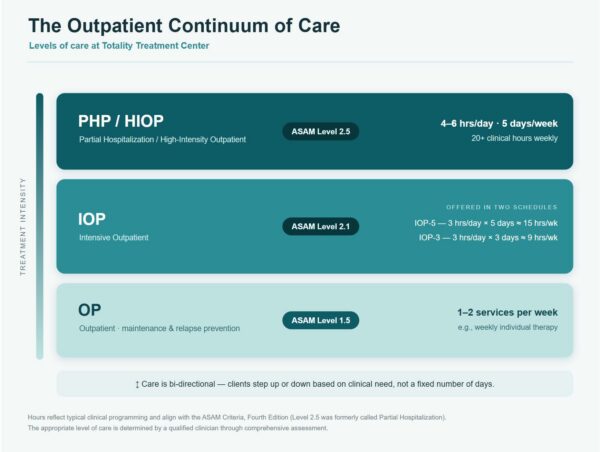
Navigating different treatment options can feel overwhelming. You may wonder how an IOP differs from traditional outpatient therapy or a partial hospitalization program.
Traditional outpatient therapy
Standard outpatient therapy usually involves one session per week, lasting 30 to 60 minutes. It’s ideal if you’re already stabilizing with minimal symptoms. However, if you find yourself needing more frequent guidance, you might explore an outpatient therapy that accepts cigna to ensure coverage.
Partial hospitalization program
A partial hospitalization program, sometimes called PHP, provides full-day care—around six hours daily for five days a week. PHPs offer a structured environment closer to inpatient treatment but allow you to go home in the evenings. If you require a higher level of care than an IOP but prefer to avoid overnight stays, consider a partial hospitalization program that accepts uhc.
Intensive outpatient program
An IOP falls between these levels, with approximately three hours of therapy daily, three to five days per week (Verywell Mind). This setup gives you a significant therapeutic dose while maintaining your day-to-day life. If you have Blue Cross Blue Shield, look into our iop program that takes bcbs.
Exploring program schedule
The success of your treatment often hinges on how well the schedule fits your life. Understanding the typical timetable can help you plan ahead.
Session frequency and duration
Most intensive outpatient programs provide:
- 2 to 3 hours of therapy per day
- 3 to 5 days each week
- A total program length of 5 to 8 weeks
This consistency builds structure and accountability, which are key for symptom management and long-term recovery.
Telehealth and hybrid options
Many IOPs now include telehealth sessions, making it easier to attend group or individual therapy virtually. Hybrid programs let you split time between in-person meetings and remote care, enhancing flexibility if you live far from a treatment center or have transportation challenges.
Reviewing medication management
A core component of an iop with mental health medication management is the integration of psychiatric care. Proper medication supervision can stabilize symptoms and enhance therapy outcomes.
Psychiatric assessment process
Upon enrolling, you’ll meet with a psychiatrist or psychiatric nurse practitioner for a comprehensive evaluation. This assessment covers:
- Your medication and treatment history
- Physical health status
- Co-occurring mental health conditions
- Social and environmental factors
This holistic approach ensures your medication plan aligns with your unique needs.
Medication-assisted treatment
Medication-assisted treatment (MAT) combines FDA-approved medications with counseling and behavioral therapies to treat substance use disorders and co-occurring mental health conditions (Ethos Wellness). MAT benefits include:
- Reducing cravings and withdrawal symptoms
- Improving cognitive function for better engagement in therapy
- Addressing disorders like depression or anxiety concurrently
- Supporting long-term behavioral change
Eligibility for MAT involves evaluating substance use severity, medical and psychological health, pregnancy status if applicable, and your treatment history (Ethos Wellness).
Common medication types
Medications commonly managed in an IOP include:
- Antidepressants (SSRIs, SNRIs) with onset of benefits in 4 to 8 weeks (NIMH)
- Esketamine for treatment-resistant depression, offering rapid relief within hours (NIMH)
- Atypical antipsychotics for symptoms of psychosis and severe mood disorders (NIMH)
- Mood stabilizers such as lithium or anticonvulsants for bipolar disorder
Because people respond differently, your provider will adjust dosages and combinations over time. Frequent check-ins—often weekly—help fine-tune your plan (DeSoto Memorial Hospital Behavioral Health).
Highlighting integrated benefits
Combining therapy with medication management creates a comprehensive treatment experience. You’ll benefit from multiple support layers that reinforce one another.
Enhancing engagement
Studies show that integrated medication management increases participation in therapy, because stabilized symptoms make it easier to focus and learn coping skills. National data indicate that over 16.5% of US adults used prescription mental health medications in 2020, reflecting the common role of medication in treatment settings (DeSoto Memorial Hospital Behavioral Health).
Addressing co-occurring disorders
An IOP with mental health medication management ensures you’re not just tackling one diagnosis. If you need outpatient treatment for dual diagnosis, this integrated approach can address mood disorders, anxiety, PTSD and substance use concurrently.
Relapse prevention support
Medication can reduce the intensity of cravings, while therapy teaches you relapse-prevention strategies. Together, they form a robust safety net to support long-term recovery and reduce the risk of setbacks. For ongoing relapse prevention services, consider programs like our addiction iop with aftercare support.
Navigating admission process
Understanding the steps to enroll helps you prepare and feel more in control as you start treatment.
Assessing your readiness
Before applying, ask yourself:
- Are your symptoms interfering with daily life?
- Have lower levels of care been insufficient?
- Do you have a stable environment to practice new coping skills?
A frank evaluation of your needs will guide you to the right level of care.
Intake and evaluation steps
The typical admission process includes:
- Initial phone or online consultation
- Completion of medical and psychiatric intake forms
- In-depth assessment by a multidisciplinary team
- Development of a personalized treatment plan
Each stage ensures that the program meets your clinical and personal requirements.
Insurance verification tips
Verify your benefits early to avoid surprises. If you’re covered by Cigna, ask about outpatient therapy that accepts cigna. Blue Cross Blue Shield members can check an iop program that takes bcbs. For veterans, a structured outpatient program for veterans may offer specialized support.
Choosing the right program
You’re investing in your health, so select a program that aligns with your goals, budget, and lifestyle.
Evaluating credentials
Look for accreditation and licensure from recognized authorities. Confirm that staff includes licensed therapists, psychiatrists, and medical professionals experienced in mental health and addiction treatment.
Insurance and cost factors
Compare out-of-pocket costs once you know your coverage. Ask about sliding-scale fees or scholarships if you lack insurance. If dual diagnosis is a concern, explore a dual diagnosis php treatment.
Location and accessibility
Consider travel time and convenience. If you need local options, search for an intensive outpatient program near me. For busy schedules, choose a center offering telehealth or evening sessions.
Planning aftercare steps
Recovery doesn’t end when your IOP does. A clear aftercare plan keeps you on track.
Transition to lower care
Many programs recommend moving from an IOP to weekly outpatient therapy or a sober living step down from iop program to maintain accountability and routine.
Ongoing support networks
Continue attending support groups or alumni meetings. Peer connections built during your IOP can become valuable recovery allies.
Sober living options
If you need structured housing, explore sober living residences that emphasize a drug-free environment and peer support. These settings bridge the gap between intensive treatment and independent living.
Recovery is a journey that requires structured support, evidence-based therapies, and personalized medication management. By choosing an intensive outpatient program that integrates both therapy and psychiatric care, you’ll gain the tools and stability needed to move forward with confidence. Take the next step by consulting a provider to discuss your treatment options and start building a sustainable path to recovery. For comprehensive outpatient resources, explore our outpatient mental health and addiction treatment page or reach out for a consultation today.