Overview of the admissions process
Understanding the admission process for addiction treatment in Los Angeles can help you take the first step toward recovery with confidence. When you begin exploring your options, you will work directly with an admissions navigator who guides you through each stage, from initial phone consultation to moving into a supportive treatment environment. This process is designed to gather essential information, verify insurance coverage, and match you with the right level of care—all tailored to your unique needs in the Los Angeles area.
According to the American Addiction Centers, the admissions process in California typically starts with a conversation about your medical history, mental health status, and personal goals for treatment [1]. Admissions may occur on the same day you call, or you might schedule a start date that accommodates travel and personal commitments.
Gather necessary information
Before your intake call, collect the personal and medical details you’ll need to share. Having this information ready can speed up the process and reduce back-and-forth.
Personal and medical details
- Full name, date of birth, and contact information
- Emergency contacts and preferred communication method
- Current medications, allergies, and preexisting conditions
- Mental health diagnoses or co-occurring disorders
- Recent substance use history and any previous treatment episodes
List of items to pack
Your admissions navigator will provide a detailed packing list. Common items include:
- Valid ID and insurance cards
- Comfortable clothing and footwear
- Toiletries and personal hygiene items
- Prescription medications in original containers
- A small amount of cash for incidentals
Packing only permitted items helps you focus on your recovery from day one.
Verify insurance and payment options
Treatment costs can be a barrier without clear information on coverage. Understanding your benefits ensures you access care without surprises.
Private insurance plans
Most major insurers—Aetna, Blue Cross Blue Shield, UnitedHealthcare, Kaiser Permanente, and Cigna—cover medically necessary addiction care in Los Angeles. Check your policy for:
- Inpatient versus outpatient benefits
- Authorization requirements or preapproval processes
- Daily or total coverage limits
Medi-Cal, Medicaid and Medicare
Government programs play a vital role in making rehab affordable:
- Medi-Cal often covers almost all treatment costs for qualifying individuals
- Medicare Part A can fund inpatient rehab stays in hospitals or skilled-nursing facilities
- Medicaid may cover both residential and outpatient services
Uninsured and sliding scale care
If you do not have coverage, Los Angeles County offers:
- Approximately 693 facilities that provide reduced-charge or free services [2]
- Publicly funded programs serving nearly 38,000 residents
- Community clinics and nonprofit rehabs with sliding-scale fees
Discuss payment plans with your navigator to find a solution that fits your budget.
Choose appropriate care level
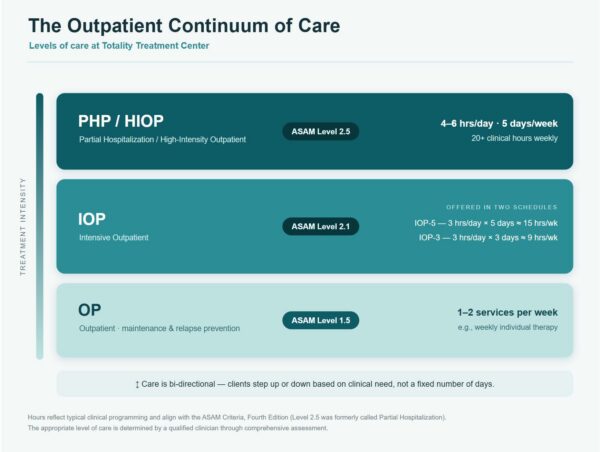
Selecting the right program depends on your clinical needs, personal commitments, and recovery goals. Below is an overview of common care levels in Los Angeles.
| Level of Care | Description |
|---|---|
| Residential care | 24-hour support in a live-in facility, ideal for severe addiction or co-occurring disorders |
| Partial hospitalization program | Structured day treatment, returning home evenings, balances intensive therapy with flexibility |
| Intensive outpatient program | Evening or weekend sessions, suitable when you need to maintain work or family responsibilities |
| Standard outpatient program | Weekly therapy sessions, a lower-intensity option for continuing care |
Inpatient and residential care
Residential programs remove you from triggers and daily stressors. You receive medical supervision, group therapy, individual counseling, and holistic services under one roof. For details on housing options, explore residential care near los angeles ca.
Intensive and partial hospitalization programs
- Partial hospitalization programs (PHP) offer a high level of care without overnight stays. See partial hospitalization program los angeles for schedules and locations.
- Intensive outpatient programs (IOP) provide three or more sessions per week, helping you transition back to daily life. Learn more at intensive outpatient program los angeles.
Outpatient program options
Standard outpatient care might include weekly individual therapy, group counseling, and support groups. If your recovery plan fits this model, start with starting outpatient program in los angeles.
Schedule assessment and intake
Once you know your preferred level of care, book your assessment appointment. Timeliness can reduce delays and help you begin treatment sooner.
Initial assessment steps
- Contact the admissions line or fill out an online form
- Review your personal, medical, and insurance details
- Receive a confirmation call from a clinical coordinator
- Schedule your in-person or virtual assessment
Your first evaluation determines the most appropriate treatment track and identifies any special accommodations you may need.
Same-day admission possibilities
Many Los Angeles rehabs offer same-day admission for urgent cases or when beds are available. If you need immediate support, ask about same-day admission drug rehab los angeles or check how quickly can you start rehab in los angeles.
Plan for your first day
Knowing what to expect on day one helps you feel more comfortable and focused on recovery.
What to expect on day one
- Orientation meeting with clinical staff
- Medical evaluation and vital signs check
- Group introduction and peer welcome session
- Overview of daily schedule, rules, and goals
For a detailed walkthrough, see what to expect first day in rehab los angeles.
Clinical staff introduction and orientation
Your first contact with clinical staff establishes a foundation of trust. Therapists, nurses, and case managers will explain:
- Treatment philosophy and programs
- Confidentiality and privacy policies
- Goal-setting and discharge planning
Learn more at first contact with clinical staff in la rehab.
Navigate local environment
Being in Los Angeles offers unique advantages for your recovery journey.
Benefits of Los Angeles location
- Mild climate supports outdoor activities and holistic therapies
- Access to world-class medical centers and specialized clinicians
- Diverse support groups and community resources
- Proximity to beaches, hiking trails, and wellness retreats
Transportation and commute planning
Los Angeles traffic can be challenging. Consider:
- Selecting a facility near your home or work
- Planning routes during off-peak hours
- Using ride-share services or public transit stops close to the center
For tips on managing your commute, visit navigating la traffic to rehab — planning your commute.
Plan next steps after admission
Recovery extends beyond the walls of the treatment center. Early planning for aftercare supports long-term success.
Continuing care and aftercare
- Step-down programs such as outpatient or IOP
- Peer support groups like 12-Step meetings or SMART Recovery
- Sober living homes for a structured, substance-free environment
Involving family and support network
Engaging loved ones creates lasting motivation:
- Family therapy sessions to rebuild trust
- Educational workshops for understanding addiction
- Ongoing communication channels with clinical staff
Discover more about dual-focus support at dual diagnosis admission in los angeles.
Get consultation and intake
You do not have to navigate this journey alone. At Totality Treatment Center’s Los Angeles location, our admissions team is ready to answer your questions and guide you every step of the way.
- Schedule your consultation for addiction treatment in la
- Ask about when to begin rehab in los angeles
- Learn how to prepare for outpatient admission steps los angeles
Taking that first step can feel daunting, but with the right support and clear guidance, you can embark on a path toward lasting recovery today.