If you are exploring Covered California detox programs, you are likely trying to balance two urgent needs: getting safe, effective treatment and keeping care affordable. Understanding how Covered California works for detox and related addiction and mental health services can help you move forward with more confidence and fewer financial surprises.
This guide walks you through how Covered California plans approach detox, what is usually covered, how to find in-network programs, and how detox fits into the larger continuum of care like rehab, PHP, IOP, and disorder-specific treatment.
How Covered California works for detox and rehab
Covered California is the health insurance marketplace for California residents, created under the Affordable Care Act. It helps you enroll in brand-name plans from private insurers and Medi-Cal, often with financial help based on your income. These plans must include mental health and substance use disorder treatment as essential health benefits, which includes many types of detox and rehab services [1].
Under federal law and California regulation, nearly all marketplace plans must provide full or partial coverage for substance use disorder care, including medical detox, inpatient rehab, and outpatient services [2]. This does not mean everything is free, but it does mean addiction and mental health care must be covered similarly to medical and surgical care.
You choose a specific plan from companies such as Aetna, Elevance Health (Anthem), Blue Cross Blue Shield affiliates, Cigna, Kaiser Permanente, Humana, and others, each with its own network and cost structure [2]. Detox programs that are in-network with your plan typically have much lower out-of-pocket costs than out-of-network options.
What “detox” usually includes under Covered California
Detox is the medically supervised process of clearing alcohol or drugs from your body while managing withdrawal. Covered California plans often treat detox as part of a broader substance use disorder benefit, which can include several levels of care [1].
Depending on your clinical needs and your plan, detox coverage may include:
- Medical detox in a hospital or licensed detox facility
- Detox as the first step of a residential or inpatient rehab stay
- Outpatient or ambulatory detox when safe and clinically appropriate
- Medications to manage withdrawal symptoms
- Monitoring by nurses and physicians
- Supportive counseling and discharge planning
California law requires plans to cover the diagnosis and treatment of serious mental health conditions and substance use disorders, with parity in costs compared to other health services. Plans also must ensure you can get a behavioral health follow-up within 10 business days after a referral or initial visit [3].
Detox is rarely a stand-alone solution. Most insurers expect it to connect directly to additional care, such as residential rehab, a php program that accepts covered california, or an iop program that accepts covered california. When you choose a detox center that accepts covered california, you increase the likelihood that this full continuum is both clinically appropriate and financially manageable.
Why in-network Covered California detox programs matter
When you use an in-network detox program, you take advantage of discounts negotiated between the facility and your insurance plan. This typically results in:
- Lower copays or coinsurance
- Lower or no out-of-network penalties
- More predictable billing and fewer surprise charges
- Easier prior authorization and claim processing
In California, some insurance companies have exclusive network agreements with specific addiction treatment providers. This means not every facility is in-network for every plan, even if they provide similar services. You are encouraged to verify whether a program is on your plan’s network before you admit, particularly if you are considering a specific provider such as New Directions For Women or another specialized facility [1].
If you know you will need more than detox, looking at in-network coverage for the full range of care can help. You might explore:
- Covered california rehab centers for longer-term residential or inpatient rehab
- Alcohol rehab that accepts covered california if alcohol is your primary substance
- Drug rehab that accepts covered california for other substances
- An outpatient program that takes covered california for step-down care after detox or inpatient
Levels of care typically covered
Covered California plans generally follow a continuum-of-care model. Detox is one part, but your plan may support multiple levels depending on clinical necessity.
Medical detox
Medical detox is usually covered when it is considered medically necessary, for example when withdrawal could be severe, risky, or unpredictable. This can include alcohol, opioids, benzodiazepines, and certain other substances.
Insurers often require:
- A diagnosis of substance use disorder
- Documentation of substance use history and withdrawal risk
- A physician recommendation for a specific level of detox care
Under California and federal parity laws, medical detox must be covered under behavioral health benefits similarly to other emergency or medically necessary hospital care [2].
Residential and inpatient rehab
Many people transition from detox directly into residential or inpatient care. Covered California plans, including Medi-Cal, often provide coverage for residential treatment programs, particularly when there are safety concerns, home triggers, or co-occurring mental health conditions [4].
Some centers, such as the Laguna Treatment Center in Aliso Viejo, provide comprehensive medical detox and inpatient care and are in-network with many top insurers [2]. Facilities like this can offer a smoother, continuous path from detox through early recovery, all within your plan’s network.
PHP, IOP, and outpatient care
Once you have completed detox and possibly residential care, your treatment team may recommend:
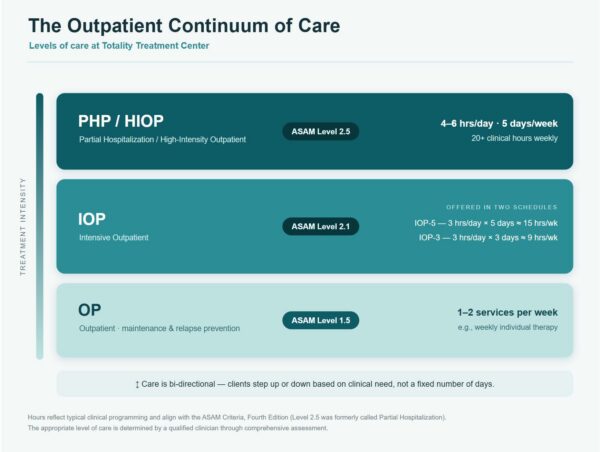
- Partial Hospitalization Program (PHP), which offers full-day structured treatment while you sleep at home or in sober housing
- Intensive Outpatient Program (IOP), which typically provides several treatment sessions per week while you work, study, or care for family
- Standard outpatient therapy, which may be individual, group, or family counseling
Covered California plans typically cover these levels of care when they are part of a medically necessary treatment plan. You can search specifically for a php program that accepts covered california or an iop program that accepts covered california to keep costs predictable.
Telehealth and remote support
California has expanded telehealth options for addiction treatment. There are nearly 900 facilities in the state that offer virtual services, including remote detox support, counseling, and follow-up care. Many of these services are covered by insurance plans, including those available through Covered California [2].
Telehealth can be especially valuable if you live in a rural area, have transportation barriers, or need more flexible scheduling while you continue to work or care for family.
Preventive benefits and no-cost services
Covered California plans must provide certain preventive mental health and substance use services at no cost when you use in-network providers. These services are not meant for ongoing treatment but for early detection and support.
Examples of preventive benefits include:
- Mental health and substance use screenings
- Some brief counseling or early interventions
- Education and prevention visits
As of 2026, all Covered California plans include free preventive mental health and substance use disorder services when provided in-network and not part of ongoing treatment [3]. Some plans also include:
- Access to meditation or mindfulness apps
- 24/7 crisis-support hotlines
- Peer support for substance use concerns [3]
Catastrophic or minimum-coverage plans, available to people under 30, may offer up to three free outpatient or urgent-care mental health visits per year, while other services come with higher deductibles and costs [3]. If you expect to need detox or rehab, it is important to understand how these plan limitations affect you.
If you are unsure whether what you need is preventive support or a higher level of care such as detox, you can start with a screening visit. Your provider can then help determine the appropriate treatment level and work with your plan on authorization.
Costs, copays, and plan “metal tiers”
Covered California plans are categorized into metal tiers, such as Bronze, Silver, Gold, and Platinum. These tiers do not change the quality of detox or rehab you receive, but they do change how costs are shared between you and the insurance company.
In general:
- Bronze plans have lower monthly premiums but higher deductibles and out-of-pocket costs when you use services
- Gold and Platinum plans have higher premiums but lower copays and deductibles
- Silver plans may qualify for additional cost-sharing reductions if your income is within certain limits
Non-preventive detox and addiction treatment services are covered, but you may face copays, coinsurance, or deductible requirements depending on your metal tier and specific plan design [3].
If you expect to need intensive services such as medical detox, residential rehab, or ongoing PHP or IOP, you may want to factor these potential costs into your plan selection during open enrollment.
Challenges with denials and appeals
Although coverage is required by law, the process is not always simple. Some California providers have reported high rates of initial denials for addiction treatment services, especially with certain insurers.
For example, The Lakes treatment center in rural Calaveras County, which serves patients insured through Covered California, reported appealing 66 coverage denials by Anthem for addiction treatment between 2022 and mid-2023, winning more than 90 percent of those appeals [5]. Across California, Anthem Blue Cross has had the highest rate of denials overturned on appeal, with about two-thirds of medical necessity denials reversed by the Department of Managed Health Care from 2021 to 2024 [5].
Anthem’s use of “prepayment review,” which requires facilities to submit extensive documentation before payment, has affected more than half of substance use disorder providers in California and contributed to delayed payments, financial strain, and in some cases staff layoffs and reduced services [5]. By January 2024, The Lakes reported over 400,000 dollars in delayed payments and had to cut staff hours and positions to remain open [5].
For you, this means:
- Prior authorizations and documentation are crucial
- Even medically necessary detox or residential care can be denied initially
- Appealing denials is often successful but can be time consuming
Choosing an experienced detox center that accepts covered california or a covered california mental health facility that regularly works with your specific insurer can make the process smoother. Many programs will help you with prior authorizations, utilization reviews, and appeals if needed.
Verifying your Covered California detox benefits
Before you admit to a detox program, you can take several steps to clarify your coverage and likely costs.
- Call the number on your insurance card
Ask specifically about:
- Behavioral health and substance use disorder benefits
- Coverage for inpatient or residential detox
- Coverage for outpatient or ambulatory detox
- Prior authorization requirements
- In-network facilities within a reasonable distance
- Confirm network status for the specific facility
In California, some insurers have exclusive agreements with certain addiction treatment providers, so not all programs are in-network even if they offer similar care [1]. Ask the detox center directly if they are in-network with your exact plan, not just your insurance brand. - Use provider verification services where available
Some organizations, such as New Directions For Women and other treatment centers, offer free insurance verification to help you understand what your plan covers for detox and rehab and what your out-of-pocket costs might be [1]. Many centers that accept United Healthcare or similar insurers also provide no-obligation verification services for detox coverage [6]. - Ask about the full continuum of care
Verify not only detox coverage but also:
- Residential or inpatient rehab
- PHP and IOP services
- Outpatient therapy and medication management
- Telehealth options
Planning for the entire recovery path can help you avoid disruptions after detox.
Covered California detox and co-occurring mental health conditions
If you are living with both a substance use disorder and a mental health condition, such as depression, anxiety, bipolar disorder, or PTSD, you may need integrated or dual diagnosis care rather than detox alone.
Covered California plans are required to cover serious mental health conditions with parity, which means your out-of-pocket costs for behavioral health services should be comparable to other medical services [3]. You can look for:
- Dual diagnosis treatment that accepts covered california
- Anxiety treatment that accepts covered california
- Depression treatment that accepts covered california
- Bipolar disorder treatment that takes covered california
- PTSD treatment that accepts covered california
Choosing a program that fully addresses both your addiction and your mental health needs can reduce your risk of relapse after detox and support more stable long-term recovery.
Options if you do not have insurance
If you do not currently have health insurance, you still have options for detox and treatment in California. The state offers multiple free or state-funded programs based on income and specific eligibility criteria, and these can include detox and ongoing care [2].
You can:
- Apply for Medi-Cal through Covered California if you meet income and residency requirements
- Explore county-funded detox and rehab programs
- Look for community clinics or nonprofit agencies with sliding-scale or grant-funded services
Even if you are not yet enrolled in a plan, reaching out to a treatment provider can help you understand what is available in your area and how to start the enrollment process.
Putting it all together: your next steps
Covered California detox programs exist at the intersection of clinical need and financial reality. Plans on the marketplace are required to cover medically necessary substance use disorder treatment, including detox, but your experience will depend on your specific plan, chosen providers, and how well your care team navigates authorization and billing.
To move forward:
- Clarify your current insurance status and metal tier
- Focus on in-network detox and rehab providers when possible
- Ask about prior authorization for detox and next-step levels of care
- Consider whether you need specialized services such as mental health treatment that takes covered california or integrated dual diagnosis care
- Make use of any free verification services offered by treatment centers
If you are ready to explore your options, you might begin by locating a detox center that accepts covered california and then mapping out your follow-up care through covered california rehab centers, PHP, IOP, or outpatient programs that are part of the same network. This step-by-step approach can help you use your benefits fully while focusing your energy where it matters most, on healing and long-term recovery.