Understanding PTSD and your Covered California benefits
If you are looking for PTSD treatment that accepts Covered California, you are trying to balance two complex tasks at once. You are working to manage serious symptoms while also trying to understand what your health plan will actually pay for. Knowing how Covered California works for behavioral health care can make it easier to move forward and start treatment with more confidence.
All Covered California plans must include mental and behavioral health benefits, including counseling and psychotherapy for conditions such as PTSD, under the Affordable Care Act (ACA) essential health benefits rules [1]. California law also requires plans to cover serious mental health conditions on the same terms as other medical conditions, which includes many of the diagnoses that commonly occur with PTSD, such as major depressive disorder and panic disorder [1].
Understanding these protections can help you use your benefits fully and choose PTSD treatment that fits your needs and your budget.
How PTSD treatment is covered through Covered California
When you enroll in a Covered California plan, you receive access to a range of mental health and substance use disorder services. PTSD treatment can fall into both categories, especially if you are dealing with trauma and co‑occurring addiction.
All ACA compliant plans offered through Covered California must cover:
- Mental health and behavioral health services
- Counseling and psychotherapy for conditions such as PTSD
- Treatment for serious mental health conditions like major depressive disorder and panic disorder, which often occur alongside PTSD [1]
Non preventive mental health services for serious conditions, including PTSD and related disorders, are covered, but you may need to pay copays, coinsurance, or meet a deductible depending on your plan’s metal tier [2].
California parity laws also require that out of pocket costs for mental health care are comparable to what you would pay for other types of medical care. Plans must also offer a behavioral health follow up appointment within 10 business days after a referral or initial visit, which is important when you are beginning PTSD treatment or adjusting your plan of care [2].
Preventive versus ongoing PTSD services
Covered California plans separate some benefits into preventive services and ongoing treatment. Understanding the difference can help you anticipate your costs.
All health plans offered through Covered California must cover certain preventive mental health and substance use disorder services at no cost to you, as long as you use in network providers and the services are not part of ongoing treatment [2]. These services might include initial screenings, brief counseling, or early intervention visits.
Once PTSD is diagnosed and you begin a structured treatment plan, your care is usually considered non preventive. At that point:
- Visits are still covered, but copays, coinsurance, or deductibles may apply
- Your cost sharing depends on your plan type, such as Bronze, Silver, Gold, or Platinum
- Prior authorization may be required for higher levels of care, such as residential or partial hospitalization
Certain plans may also include extra no cost mental health benefits. Some Covered California plans provide access to free meditation apps, 24/7 crisis support hotlines, and peer support resources that can support PTSD recovery between appointments, depending on the specific plan you select [2].
Levels of PTSD care Covered California may support
PTSD treatment does not look the same for everyone. Your symptoms, safety, and daily responsibilities shape what level of care you need. Covered California plans can cover a range of intensity levels, as long as treatment is medically necessary and provided by in network programs.
Inpatient and residential treatment
If your PTSD symptoms are severe, if you are at risk of harming yourself, or if you have significant co occurring substance use, a short term inpatient or residential stay might be recommended. California law requires that serious mental health conditions receive coverage for inpatient treatment on equal terms with medical conditions [1].
Inpatient or residential care may be appropriate when:
- You need 24 hour monitoring for safety
- You are unable to manage basic self care due to PTSD or co occurring disorders
- You are beginning detox for alcohol or drugs along with PTSD treatment
If you also need detox, you can look for a detox center that accepts Covered California or explore covered california detox programs that also provide trauma informed care.
Partial hospitalization programs (PHP)
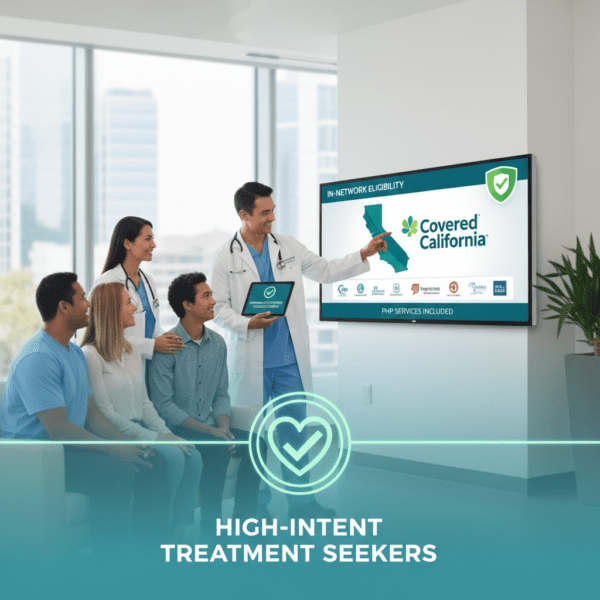
A PHP program provides full day treatment without overnight stays. This level is often used when you need intensive PTSD treatment but are stable enough to sleep at home. If you need structured trauma therapy, medication management, and daily groups, you can look into a php program that accepts covered california.
PHP can work well if:
- You are transitioning from inpatient care
- You need several hours of treatment per day for PTSD and related conditions
- You want a high level of support while still living at home or in supportive housing
Intensive outpatient programs (IOP)
An IOP program provides multiple therapy sessions per week, usually in the evenings or during set blocks of time. This can be a strong fit when you need more support than weekly therapy but cannot commit to PHP. To keep costs lower, you may want to consider an iop program that accepts covered california.
IOP is often recommended when:
- You are stepping down from PHP or residential treatment
- You need structured trauma focused therapy alongside work or school
- You are managing PTSD with co occurring disorders, such as depression, anxiety, or substance use
Standard outpatient therapy
For many people, weekly or biweekly outpatient therapy is the foundation of PTSD treatment. Your Covered California plan must provide coverage for therapy and counseling for PTSD and related conditions [1].
You can find an outpatient program that takes covered california or work directly with a trauma informed therapist in your plan’s network. If you are dealing with other conditions alongside PTSD, you might also explore:
- anxiety treatment that accepts covered california
- depression treatment that accepts covered california
- bipolar disorder treatment that takes covered california
These services often overlap with PTSD care and may be coordinated as part of an integrated treatment plan.
PTSD, substance use, and dual diagnosis care
PTSD and substance use disorders frequently occur together. If you use alcohol or drugs to cope with trauma symptoms, it is important to seek integrated treatment that addresses both conditions. California law requires plans to cover both mental health and substance use disorder treatment, and serious mental health conditions must be covered on the same basis as other medical issues [1].
When you have both PTSD and addiction, you might look for:
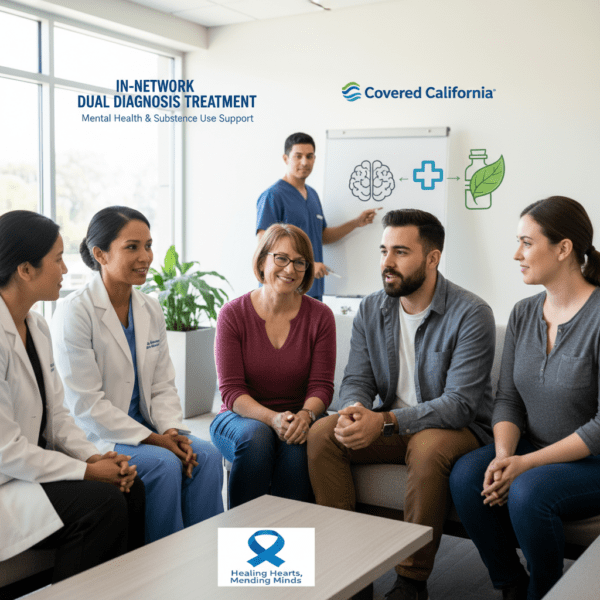
- dual diagnosis treatment that accepts covered california
- alcohol rehab that accepts covered california if alcohol is your primary substance
- drug rehab that accepts covered california for other substance use
Integrated programs are designed to treat trauma symptoms, cravings, and withdrawal together. This reduces the risk that untreated PTSD will trigger relapse after you leave a program.
Why in‑network PTSD programs reduce your costs
When you seek PTSD treatment that accepts Covered California, it is not enough that the provider simply bills your insurance. Working with in network facilities and clinicians helps control your out of pocket costs and ensures you can fully use your benefits.
In network means:
- The provider has a contract with your plan
- Rates for services are pre negotiated, which lowers the total cost
- Your plan’s standard copays, coinsurance, and deductibles apply
Out of network providers may be much more expensive, and your plan may pay little or nothing toward those services, depending on your specific coverage. Because mental health parity requires similar cost sharing for behavioral and medical care, using in network PTSD treatment helps you take advantage of these protections [2].
You can also review broader in network options by exploring covered california rehab centers or covered california mental health facilities, then asking which programs offer PTSD specific services.
Catastrophic plans and PTSD visits
If you are under 30 and enrolled in a minimum coverage or catastrophic plan, your benefits work a little differently. These plans usually have lower monthly premiums and higher deductibles for most services. However, they still provide specific mental health benefits.
Catastrophic plans available through Covered California include up to three outpatient or urgent care mental health visits at no cost each year, which can be used for PTSD assessment, stabilization, or crisis support [2]. After those visits, ongoing treatment is still covered, but you may need to meet a higher deductible before the plan begins to pay.
If you are managing PTSD on a catastrophic plan, it is especially important to:
- Use those three free visits strategically
- Work with in network providers
- Ask about sliding scale options or community resources if you need additional support before meeting your deductible
Accessing PTSD care and appointment timelines
When you decide to start PTSD treatment, long wait times can be discouraging. California has taken steps to improve access. Health plans, including those available through Covered California, must provide a return appointment within 10 business days when you are receiving mental health or substance abuse treatment [1].
This requirement supports continuity of care for PTSD by:
- Reducing gaps between sessions when you are working through trauma
- Helping you stay connected to your treatment plan during vulnerable periods
- Encouraging timely follow up after medication changes or symptom flare ups
Depending on your plan, you may also have 24/7 crisis support lines and digital tools available at no additional cost. Some plans offer free meditation apps, anonymous peer support, or specialized hotlines for substance use concerns [2].
You may be able to make appointments directly with mental health providers, or your plan may require a referral from your primary care physician. Access pathways can vary, so it is important to call your plan or check your member portal to confirm the steps for PTSD treatment in your specific network [1].
If you feel stuck while trying to use your benefits, contact your plan’s member services and ask specifically about PTSD treatment options and behavioral health networks. Using precise language often leads to more detailed support.
Using Covered California tools to find PTSD providers
If you are uninsured or considering a plan change, Covered California offers resources to help you identify coverage that supports PTSD treatment. The marketplace provides a Compare and Select a Plan tool that allows you to see which health plans include mental health coverage that is compliant with federal and state laws, including requirements related to PTSD treatment [1].
When you use these tools, you can:
- Filter by plan metal tier and monthly premium
- Review mental and behavioral health coverage details
- Confirm that PTSD treatment and serious mental health conditions are covered
- Check if your preferred clinics or hospitals are in network
If you already have a plan, you can still use these resources to better understand your coverage and prepare for open enrollment if you want to switch to a plan with more robust behavioral health benefits.
How PTSD treatment fits with broader mental health care
PTSD rarely exists in isolation. Many people experience overlapping symptoms of anxiety, depression, bipolar disorder, or substance use. Because California law requires coverage for serious mental health conditions, your plan must provide outpatient and inpatient services for these diagnoses on equal terms with other medical issues [1].
In practical terms, this means your PTSD treatment plan can be part of a broader behavioral health strategy that may include:
- Trauma focused individual therapy
- Group therapy for survivors or veterans
- Medication management for mood, sleep, and anxiety symptoms
- Support for co occurring mental health diagnoses
If you are exploring your options, you might review mental health treatment that takes covered california to see how PTSD fits into the wider range of in network services.
Next steps for starting PTSD treatment with Covered California
Once you understand the basics of how PTSD treatment is covered, you can take practical steps to move forward:
-
Identify your plan
Find your health insurance card, note the plan name and metal tier, and log into your member portal. -
Review mental health benefits
Look for sections labeled “behavioral health,” “mental health services,” or “substance use disorder services.” Confirm copays, deductibles, and out of pocket maximums. -
Search for in network providers
Use your plan’s provider directory to search for trauma informed therapists, psychiatrists, and programs. You can also cross reference with resources for covered california rehab centers and covered california mental health facilities if you need higher levels of care. -
Ask specific questions
When you call providers, ask whether they offer PTSD focused treatment, accept your exact Covered California plan, and provide the level of care you need, such as PHP, IOP, or dual diagnosis services. -
Plan for follow up
After your first appointment, schedule follow up visits within the 10 business day window that California law requires, and ask about support between sessions, including crisis hotlines or apps that may be included with your plan.
By combining your Covered California benefits with an in network, trauma informed program, you give yourself access to PTSD treatment that is both clinically appropriate and financially realistic. With clear information about your coverage and the right providers, you can focus more fully on healing from trauma and rebuilding your life.