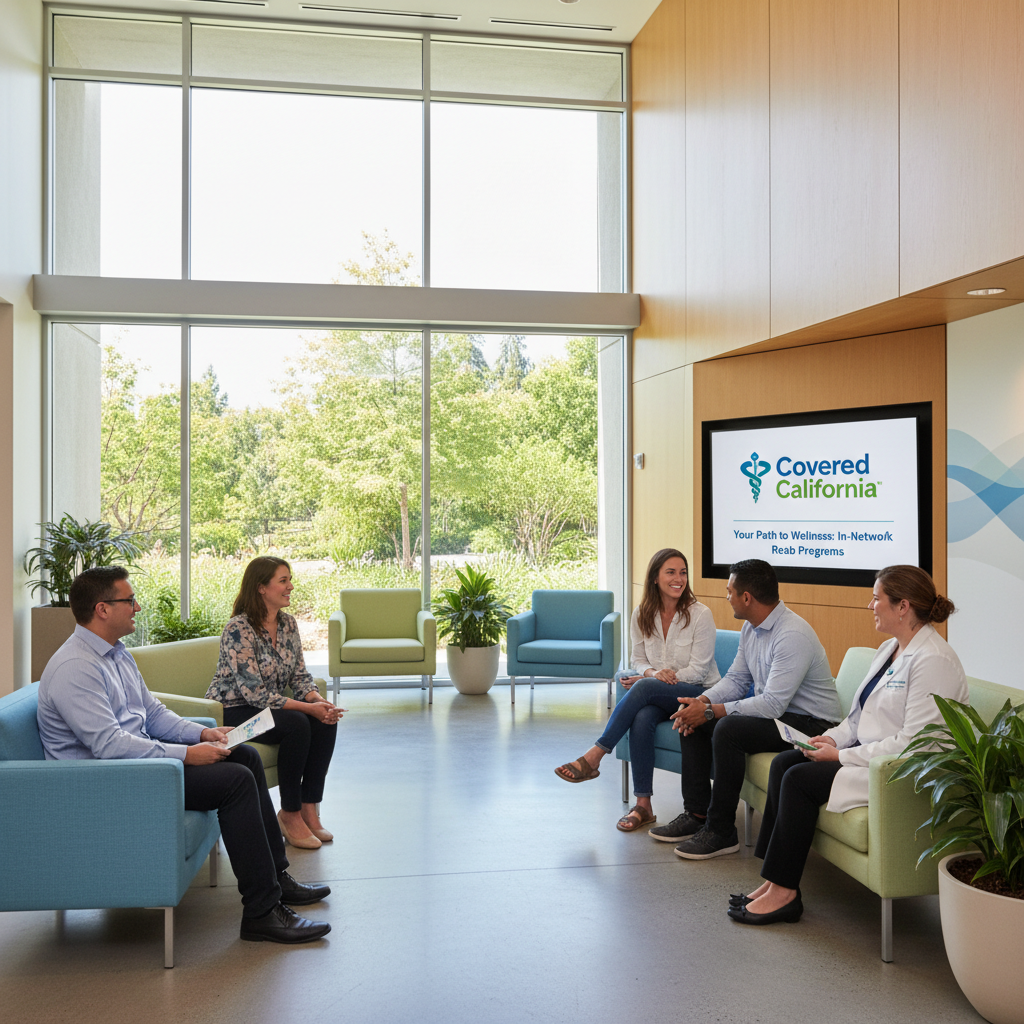
Understanding Covered California rehab centers
If you are looking for covered california rehab centers, you are likely trying to balance two priorities at once. You want high quality addiction or mental health care, and you also need to make sure your treatment is affordable and in-network with your insurance.
Covered California is the state’s health insurance marketplace under the Affordable Care Act. It helps you enroll in brand name health plans, often with financial assistance, that must cover mental health and substance use disorder treatment as essential health benefits [1]. That means your plan is required to include some level of coverage for services like detox, residential rehab, partial hospitalization (PHP), intensive outpatient (IOP), and ongoing therapy.
Not every facility participates in every plan, so understanding how Covered California works, what “in-network” really means, and how to compare programs is key to finding the best fit for your needs and budget.
How Covered California coverage works for rehab
Covered California itself is not an insurance company. Instead, it connects you with private plans and Medi-Cal options that follow federal and state rules for behavioral health coverage.
Essential benefits and parity protections
Under the Affordable Care Act, all marketplace plans must cover:
- Mental health services
- Substance use disorder treatment
- Behavioral health treatment and inpatient care
These benefits must be covered on par with medical and surgical care, which means your copays, deductibles, and visit limits for therapy or rehab must be comparable to what you pay for other health services [1]. California law also requires coverage for specific serious mental health conditions, such as major depressive disorder, bipolar disorder, schizophrenia, and anorexia nervosa, using the same terms as other medical conditions [1].
In other words, your plan cannot treat addiction or mental health as “less important” than physical health when it comes to covered services.
Preventive and ongoing care
All plans offered through Covered California must include certain preventive mental health and substance use disorder services at no cost when you use in-network providers, as long as these services are not part of ongoing treatment [2]. Examples might include:
- Screening for depression or substance use
- Brief counseling during a primary care visit
Once you begin formal treatment, such as regular therapy, PHP, IOP, or rehab, you start using your plan’s standard benefits. At that point, your costs will depend on your deductible, copays, and coinsurance, which vary by metal tier.
If you are under 30, you may also qualify for a catastrophic or minimum coverage plan. These plans offer up to three urgent care or outpatient mental health visits per year with no copays or deductibles, but they generally come with higher out of pocket costs for other services [2].
Timely access requirements
California law sets clear expectations for how quickly you should be able to access behavioral health care. If you have an initial visit or a referral for mental health or substance use treatment, your plan must offer you a follow up appointment within 10 business days [1]. This standard is meant to prevent long delays that can derail your motivation to seek help.
If you are told that the next available appointment is weeks away, you can reference this requirement and ask your plan for a timely option or an in-network alternative.
In-network vs out-of-network Covered California rehab centers
One of the most important decisions you will make is whether to choose an in-network or out-of-network facility. This choice has a direct impact on how much you pay and what your plan will approve.
Why in-network usually saves you money
In-network rehab centers have contracts with specific insurance companies to provide care at negotiated, lower rates. With Covered California plans, in-network providers typically:
- Offer reduced, prearranged prices for services
- Trigger higher coverage percentages from your plan
- Count more directly toward your in-network out-of-pocket maximum
Because of these agreements, your insurer may cover a significant portion, or in some cases nearly all, of your treatment costs at in-network facilities, especially once you meet your deductible. Out-of-network programs may be covered only partially or not at all, which can leave you with much higher bills [3].
Many PPO plans do not require referrals for addiction treatment, but they still reward you with better coverage when you stay in network. HMO plans often require a referral and usually require you to remain inside the network to maintain full benefits [3].
Verifying if a center is in-network
Because each plan has its own contracted facilities, it is critical to confirm network status before you start:
- Call the phone number on the back of your insurance card and ask for a list of in-network rehab or mental health facilities near you.
- Contact the treatment center’s admissions team and ask if they are in-network with your specific plan name and metal tier.
- Use online verification tools when available. Many rehab providers allow you to submit your insurance information securely so they can confirm your benefits directly with your insurer [3].
You can also explore options like a detox center that accepts covered california or drug rehab that accepts covered california to narrow your search to facilities that already work with these plans.
Levels of care Covered California often supports
Most Covered California plans recognize that recovery is not one size fits all. Coverage can extend across a full continuum of care, although prior authorization and medical necessity criteria typically apply.
Medically supervised detox
Detox is often the first step if you are using alcohol, opioids, benzodiazepines, or other substances that can cause dangerous withdrawal. Some Covered California plans, including Medi-Cal options, may cover detox in full at in-network locations, while others provide partial coverage depending on your deductible and coinsurance [4].
If you are specifically seeking safe withdrawal support, you may want to look for covered california detox programs or a dedicated detox center that accepts covered california.
Residential or inpatient rehab
Residential treatment provides 24 hour support in a structured environment. Plans can cover:
- Short term stays, such as 28 to 30 days
- Extended programs, such as 60 or 90 days, when clinically justified
Some plans, including Medi-Cal, may cover the full spectrum from detox through residential care and outpatient therapy when criteria are met, while others cap length of stay or require step-down to lower levels of care at set intervals [4].
If you are focusing on substance use, you can prioritize an in-network alcohol rehab that accepts covered california or drug rehab that accepts covered california in your area.
PHP and IOP programs
Partial hospitalization programs (PHP) and intensive outpatient programs (IOP) give you intensive treatment while allowing you to live at home or in supportive housing. For many people, this is a practical alternative to residential care or a step down after an inpatient stay.
Covered California plans commonly cover:
- PHP, often 5 to 6 hours per day, several days per week
- IOP, typically 3 hours per day, several days per week
Your share of cost depends on your plan design, but coverage is usually robust when programs are in network and medically necessary [5]. Exploring a php program that accepts covered california or an iop program that accepts covered california can help you find options that match your schedule and benefit structure.
Standard outpatient and virtual care
Outpatient programs provide weekly or biweekly sessions with therapists, psychiatrists, or group counselors. Many California facilities also offer telehealth, which can include virtual therapy sessions, online support groups, and remote medication management. Nearly 900 treatment facilities in California now provide some form of telehealth services for addiction and mental health treatment [6].
If you need flexibility, consider an outpatient program that takes covered california, especially if you have work, school, or caregiving responsibilities.
Covered California and mental health specific treatment
Your coverage does not stop at substance use. California has strong protections for mental health care, and Covered California plans must comply with both federal and state requirements.
Serious mental health conditions
State law requires all plans to cover diagnosis and treatment for specific mental health conditions under the same terms as medical conditions. This includes:
- Major depressive disorder
- Bipolar disorder
- Schizophrenia
- Anorexia nervosa
Your plan must apply comparable deductibles, copays, and treatment limitations to these conditions as it does to physical health. This “parity” standard is designed to prevent discrimination against people seeking mental health support [2].
If you are looking for focused care, you can explore:
- Anxiety treatment that accepts covered california
- Depression treatment that accepts covered california
- Bipolar disorder treatment that takes covered california
- PTSD treatment that accepts covered california
These programs recognize that conditions like anxiety, depression, and PTSD often intersect with substance use and may require integrated care.
Dual diagnosis and integrated programs
If you are facing both addiction and a mental health condition, you are not alone. Many people benefit from dual diagnosis treatment that addresses both at the same time. Covered California plans are required to cover substance use and mental health treatment, and many in-network centers provide fully integrated care.
Looking for dual diagnosis treatment that accepts covered california can help you find programs that coordinate therapy, medication management, and relapse prevention under one cohesive plan.
Finding mental health facilities in network
Covered California promotes tools like the Behavioral Health Treatment Services Locator, which lets you search confidentially for treatment providers across the United States, including rehab centers and mental health clinics [1]. You can combine these resources with searches for covered california mental health facilities and mental health treatment that takes covered california to identify programs that align with your benefits.
What to look for in the best Covered California rehab centers
Once you narrow your search to in-network facilities, you still have important choices to make. Not all rehab or mental health centers are the same, even if they accept the same insurance.
Accreditation and clinical quality
Accreditation from organizations like The Joint Commission signals that a facility meets national standards for safety and quality. Many California rehab centers that accept insurance hold this accreditation [5]. While accreditation is not the only marker of quality, it is an important starting point.
Beyond accreditation, you can ask:
- Are therapies evidence based and tailored to your diagnosis?
- Is there medical supervision during detox or high risk phases?
- How are co-occurring disorders identified and treated?
Matching program type to your needs
Your situation might call for a specific combination of services. This short table can help you align your needs with common Covered California program options:
| Your primary need | Helpful in-network option | Why it fits |
|---|---|---|
| Physical dependence and withdrawal risk | Covered California detox or residential program | 24 hour care for safety and stabilization |
| Intense symptoms but stable housing | PHP or IOP that accepts Covered California | Daily or near daily treatment while you live at home |
| Long term symptom management | Outpatient therapy and psychiatry | Ongoing support, medication, and relapse prevention |
| Both addiction and mental illness | Dual diagnosis program in-network | Integrated care to address both conditions together |
You can further refine your search by substance, mental health diagnosis, or level of care through resources such as covered california detox programs and covered california mental health facilities.
Practical considerations
In addition to clinical quality and coverage, you may want to consider:
- Location and ease of travel for you and your family
- Availability of telehealth or hybrid options
- Program size and environment, for example, small and intimate versus larger and more structured
- Aftercare planning, including step down to IOP, outpatient care, or local support groups
California also offers free or state-funded treatment options based on income and eligibility. If you do not yet have insurance, you may qualify for Medi-Cal or other programs that can expand your access to care [6].
How to use Covered California tools to find care
You do not have to figure everything out alone. Covered California and related resources provide several tools to help you compare plans and locate treatment.
Compare plans for behavioral health coverage
If you are still choosing a plan, the “Compare and Select a Plan” feature on the Covered California website allows you to review:
- Which plans cover your current providers or target facilities
- Differences in deductibles, copays, and out-of-pocket maximums
- Metal tiers and how they affect behavioral health costs
This can be especially important if you know you will need addiction or mental health treatment in the coming year [1].
Use treatment locators
Covered California highlights the federal Behavioral Health Treatment Services Locator, which offers an anonymous and confidential way to search for:
- Substance use treatment programs
- Mental health providers
- Co-occurring disorder clinics
You can filter by location, type of service, and payment options, then cross check which facilities are in network with your Covered California plan [1].
Work with in-network centers directly
Many centers that participate in Covered California plans, such as comprehensive treatment programs in Orange County, actively help you verify benefits and maximize coverage. For example, some providers are in network with major insurers offered through Covered California and can assist you with:
- Real time verification of eligibility and benefits
- Estimating out-of-pocket costs under your specific plan
- Requesting authorizations for higher levels of care when medically necessary [7]
When you contact a center, it is helpful to have:
- Your insurance card
- Any prior treatment or diagnosis information
- A sense of your immediate needs, such as detox, rehab, PHP, IOP, or outpatient therapy
Sharing this information allows the admissions team to match you with the right level of care and communicate clearly about what your insurance will likely cover.
Taking your next step toward lasting recovery
Even though nearly 94 percent of people with a substance use disorder did not receive treatment in 2021, cost does not have to be the obstacle that keeps you from getting help [6]. Covered California rehab centers, when chosen thoughtfully, can significantly reduce your financial burden and open the door to meaningful, sustained change.
By focusing on in-network programs, understanding your plan’s behavioral health benefits, and choosing a level of care that matches your needs, you give yourself the best chance at long term recovery. Whether you are seeking alcohol rehab that accepts covered california, mental health treatment that takes covered california, or a comprehensive dual diagnosis treatment that accepts covered california, you have options.
You do not need to have every detail figured out to reach out for help. Your plan, Covered California tools, and experienced treatment centers can work together to guide you toward care that is clinically sound, financially realistic, and aligned with your goals for lasting recovery.